Categories
Archives by date
| S | M | T | W | T | F | S |
|---|---|---|---|---|---|---|
| 1 | 2 | 3 | 4 | 5 | 6 | 7 |
| 8 | 9 | 10 | 11 | 12 | 13 | 14 |
| 15 | 16 | 17 | 18 | 19 | 20 | 21 |
| 22 | 23 | 24 | 25 | 26 | 27 | 28 |
| 29 | 30 | |||||
Now that Google Docs allow comments, you may want to know how to work it and try it in a sandbox? Head to this hand-dandy Lorem Ipsum’ed document to try it out. It’ll probably be available for a few weeks for anyone to try their hand, and then I’ll take it down and change/delete this […]
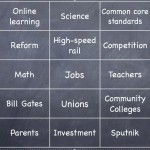
In part to make a point for (and get a minor laugh out of) my class this morning while introducing a presentation on how schools acquired the job of acquiring jobs, I put together a Bingo card for tonight's State of the Union address, using a list of words I created independently but that will […]
This semester I split my final exam for the undergraduate history of education class, with an in-class (relatively short) part and then a choice of three essay questions that my students had 60 hours to respond to (after picking one). I am now reading their essays, and if you want to try your hand, feel […]
Tim Burke's blog entry "Providing the Bricks, Not the Building" is a little obscure, but one piece of it makes me wonder about academic parochialism. Apparently a few of Burke's colleagues at Swarthmore feel it is inappropriate for a social historian to bring literature from anthropology, cultural studies, etc., into a history class at a liberal-arts […]
As my colleagues in the social-studies education program at USF would point out, one goal some teachers have for history is using a form of (past) culture shock to develop students' empathy. I think some version of empathy is useful for reading primary sources and identifying potential interpretations and questions, but "developing empathy" is not […]