Surveys that are less impressive the more you look into them
While I am on the theme of data overinterpretation this week, two recent surveys that have been overinterpreted: 1. The recent Quinnipiac University Polling Institute survey of New York City residents, which included a number of questions on school politics in the city. The New York Times’ blog entry by Winnie Hu started, “A majority of New York City voters approve […]
D***ed autocorrect by Edweek… / Rick Hess’s comment re AERA
I hate sock puppetry, and since Edweek’s server would not let me add a display name to my account this morning, it is not clear on the website that I am the author of the first response to Rick Hess’s call for public defunding of AERA. I am “USER_768949.” ((Who is USER_1??)) Hess is arguing that […]
Anticipatory Schadenfreude rhetoric
In an essay in The New Republic, Kevin Carey has apparently joined the disruptiness gang: Many factors explain the endurance of higher education institutions—the ascent of the knowledge economy, their crucial role in upper-middle class acculturation, our peculiar national enthusiasm for college sports—but the single greatest asset held by traditional colleges and universities is their […]
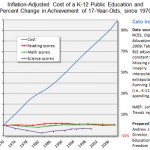
How to manipulate data and figures
On occasion, students and reporters ask me what makes me trust or distrust folks who claim to be education researchers, and it’s a harder question to answer than one might think. As an historian with some quantitative training, I am eclectic on methods–I have no purity test other than “the evidence and reasoning have to […]
Odds and ends
It’s been a wild week to be an involuntary observer this week — the week before spring break for me turned out to be very busy for both anticipated and unanticipated reasons, so I was unable to comment on the debate over SB 1718 in Florida (the “parent trigger” bill), the higher ed budget and […]