Political reporters ignore what’s staring them in the face in Tampa

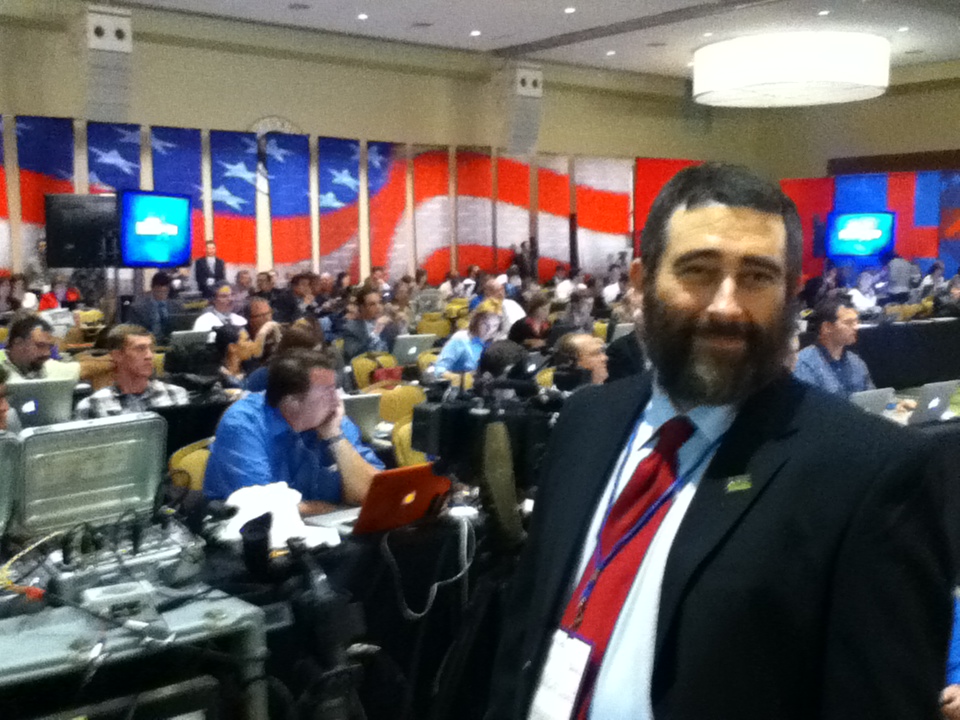
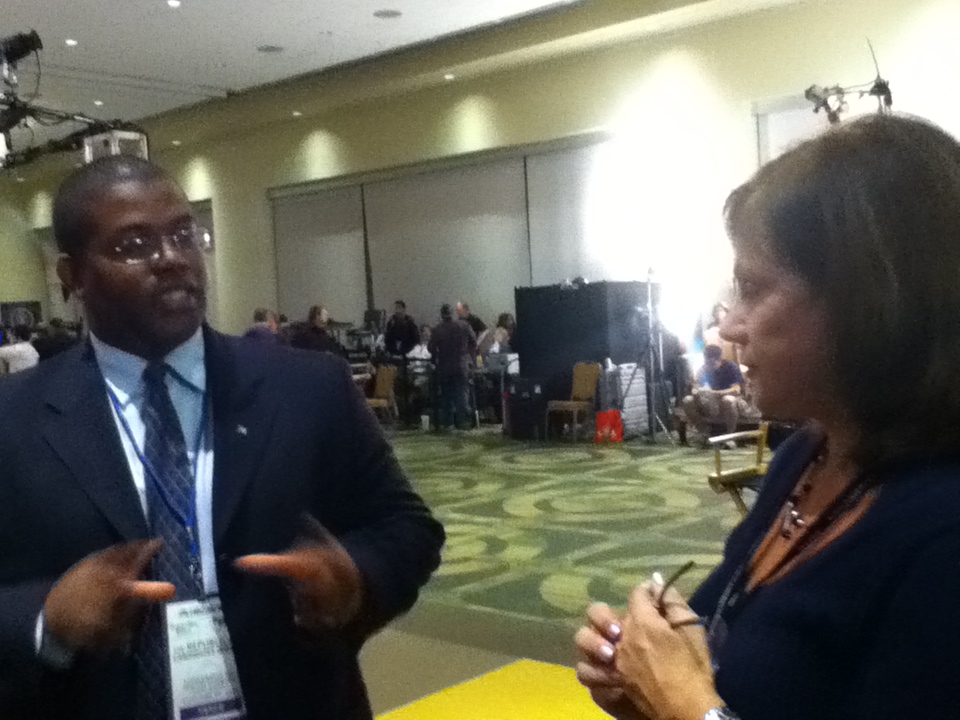
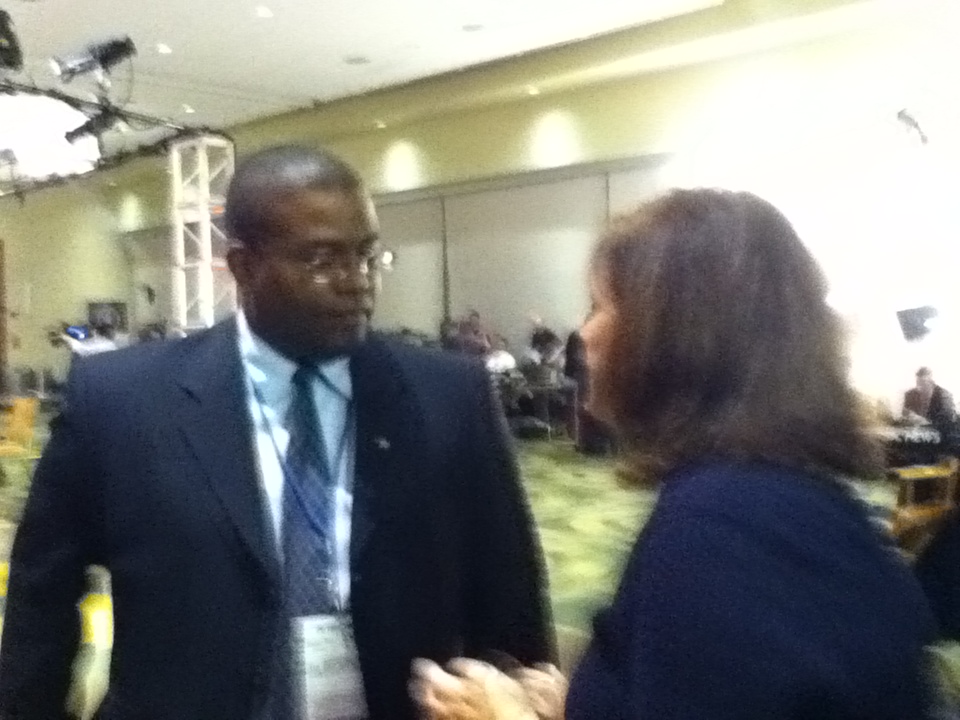
I have a political-debate hangover this morning–not from alcohol but from being on campus for most of 15 hours yesterday and getting home close to midnight. I was one of several USF faculty in the press room last night for the GOP debate on the USF Tampa campus, along with usual political-reporter go-to at USF, Susan McManus, public health professor Jay Wolfson, two colleagues in my college, Anthony Rolle and Paula Cate (the two better-looking folks in the photos below), and several others. Mitt Romney and Newt Gingrich went after each other hammer and tongs, but there were precisely three times that any candidate mentioned education, all in passing and for purposes other than discussing federal education policy. A few reporters came up to the “education faculty placard” and asked questions afterwards, but most crowded around other faculty or the designated campaign spinmeisters (and one of the candidates: Rick Santorum showed up in the press room afterwards).

I am not surprised by the lack of focus on education in this or other debates in this campaign, but I was shocked by a collective error of omission on the part of the reporters in the press room. At the end of the debate, the candidates talked about the Terri Schiavo case, and you might have thought that one of them–one of them–might have asked if anyone at USF might have something to say, especially since there were a few folks from USF Health in the room. If they had done so, USF staff would have told them that Jay Wolfson was Schiavo’s guardian ad litem for a short time early in the controversy and thus had direct knowledge with which to illuminate the candidates’ responses. As far as I can tell this morning, no reporter tried to use Wolfson’s expertise.

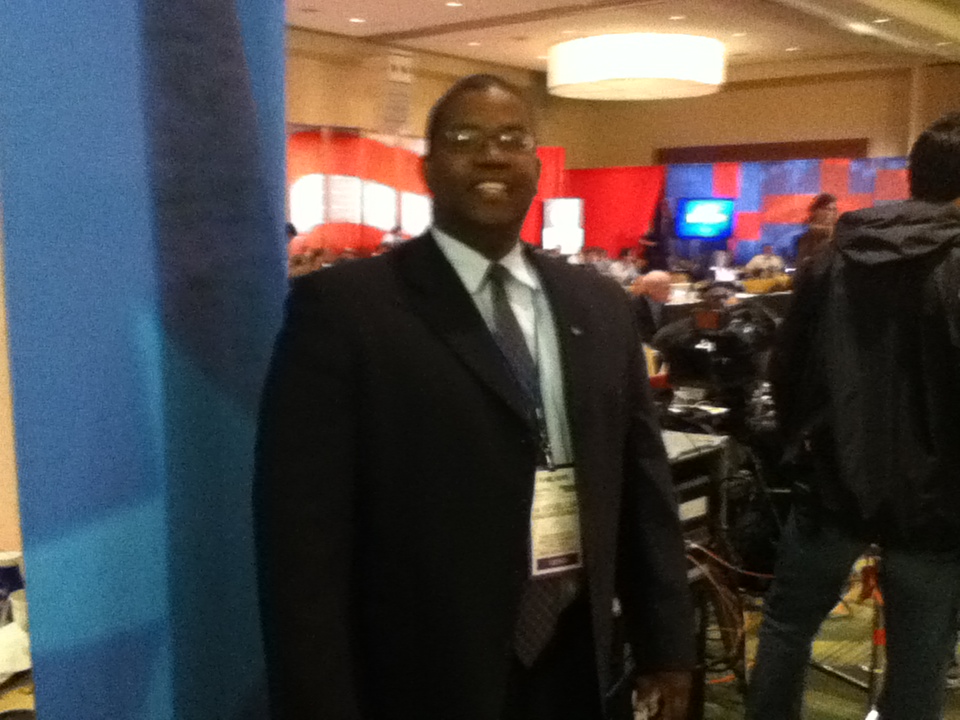
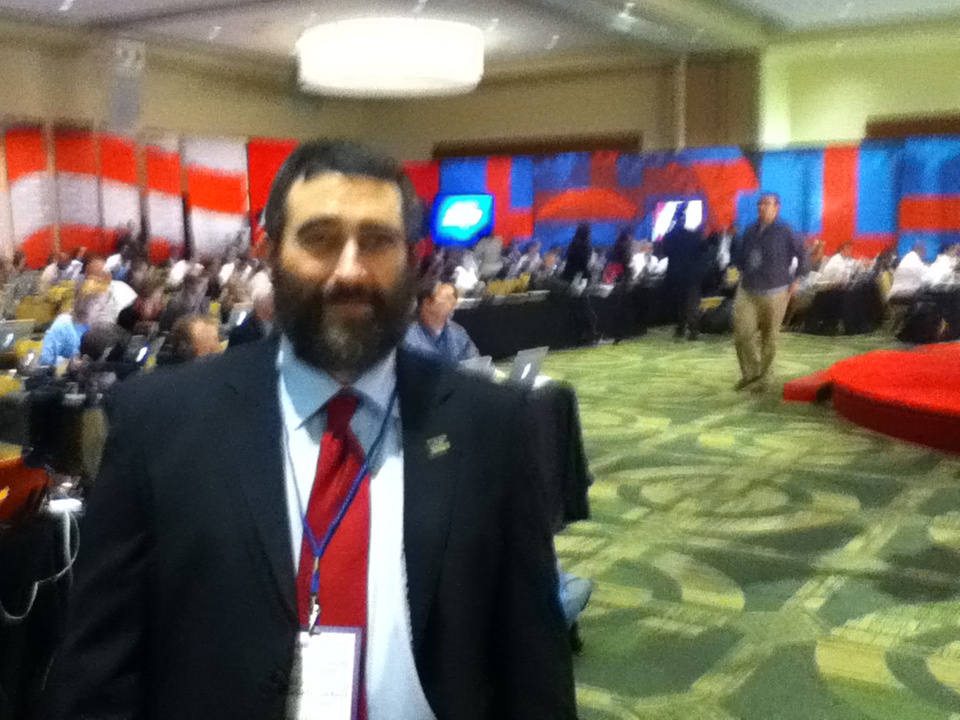
But there was plenty of red, white, and blue background for the lack of meaningful reportage, and my mediocre camera took in all the hues:
And now, I need to gather my wits and get ready for work.

Old-fashioned alt-academic careers: Diane Ravitch

Take an alternative route from academic training, acquire elder-statecraft status, say what you want, get written up. That’s pretty much what happened to Diane Ravitch, as told either by Dana Goldstein or Kevin Carey this year. ((See the responses to Carey’s recent piece by Goldstein and Mike Petrilli. I don’t know the extent to which Goldstein is right that sexism played the majority part in Ravitch’s marginalization from academically-housed historians of education, but I’ve wondered the same thing.)) I’ve written about Ravitch’s scholarship, but I think it’s important to note that her career after the Ph.D. is now what key figures in the American Historical Association are trying to legitimize: graduate students not only should have Plan B, but graduate programs in history should be careful to make non-professorial jobs “Plan B.” Plenty of recent doctorates in history and related fields are happily ignoring the lousy job market in the field. Time for the rest of us to get some postgraduate realism.

Distance Education Short Selling Investment Club

In response to Lee Fang’s feature in The Nation, How Online Learning Companies Bought America’s Schools, several DC wonks have criticized Fang’s article, from Bill Tucker’s note that the Florida Virtual School is public (something Fang never mentions) to Tyson Eberhardt’s argument that “private vendors” in virtual schooling will bring competition (presumably improving it).

Since I previously pointed out the sloppiness in Stephanie Mencimer’s November/December Mother Jones piece, which Larry Cuban has echoed, I’ll state that Tucker is right in the more literal criticism of Fang and Eberhardt not even wrong, but both they and Fang (and Mencimer, for that matter) are ignoring a key feature of distance-learning business: it’s incredibly hard to define, which changes the risks of being involved for large businesses. In the last few decades, the outsourcing of public-school management focused on a few vendors, which could fail absurdly without affecting anything other than the immediate failures (and limiting credit opportunities for future entrants in that particular service). ((and ruining education for the students…)) But distance-learning is big business and involves big businesses, and that’s a very different story.

Continue reading “Distance Education Short Selling Investment Club”

College loan proposals: who’s got recent graduates covered?

I have rarely timed my writing so well: a few days after I pointed out the obvious link between Occupy Wall Street, college-related debt of former students, and the new (and inadequate) income-based repayment program for student loans, the president announces changes to the income-based repayment program to reduce the debt-overhang burden on recent graduates and current students. As others have pointed out, the changes are incremental, and I suspect the most important effect of the announcement is simple advertisement that it exists, to get more people signed up.

The real solution is something like Kevin Carey’s proposal for income-based loans, which he advocated in a Chronicle of Higher Ed column this week. With income-based loans, we wouldn’t have to create loan-forgiveness policies for special-education teachers, rural doctors, etc.  It would be a general message: Want a college education and then serve the public at low salaries? We (the public) have your back.